2026-05-22
The Bathroom Becomes a Spa: Wellness Design Trends in Private Residences
Private bathrooms are absorbing, one fixture at a time, the engineering of destination spas: steam rooms behind glass doors, water delivered in programmed scenarios, light that imitates dawn, silence built in decibels. The shift is measurable in renovation briefs, where the master bathroom's budget share has grown from an afterthought to a figure rivaling the kitchen's. This survey maps the change across five dimensions (water, heat, light, sound, touch), each in the same format: the standard solution of the last decade, the wellness-grade replacement, and the realistic 2026 budget band. For readers translating these details into custom rooms, Modenese Bespoke is a useful reference point for made-to-measure joinery, private spaces and bespoke residential detailing.
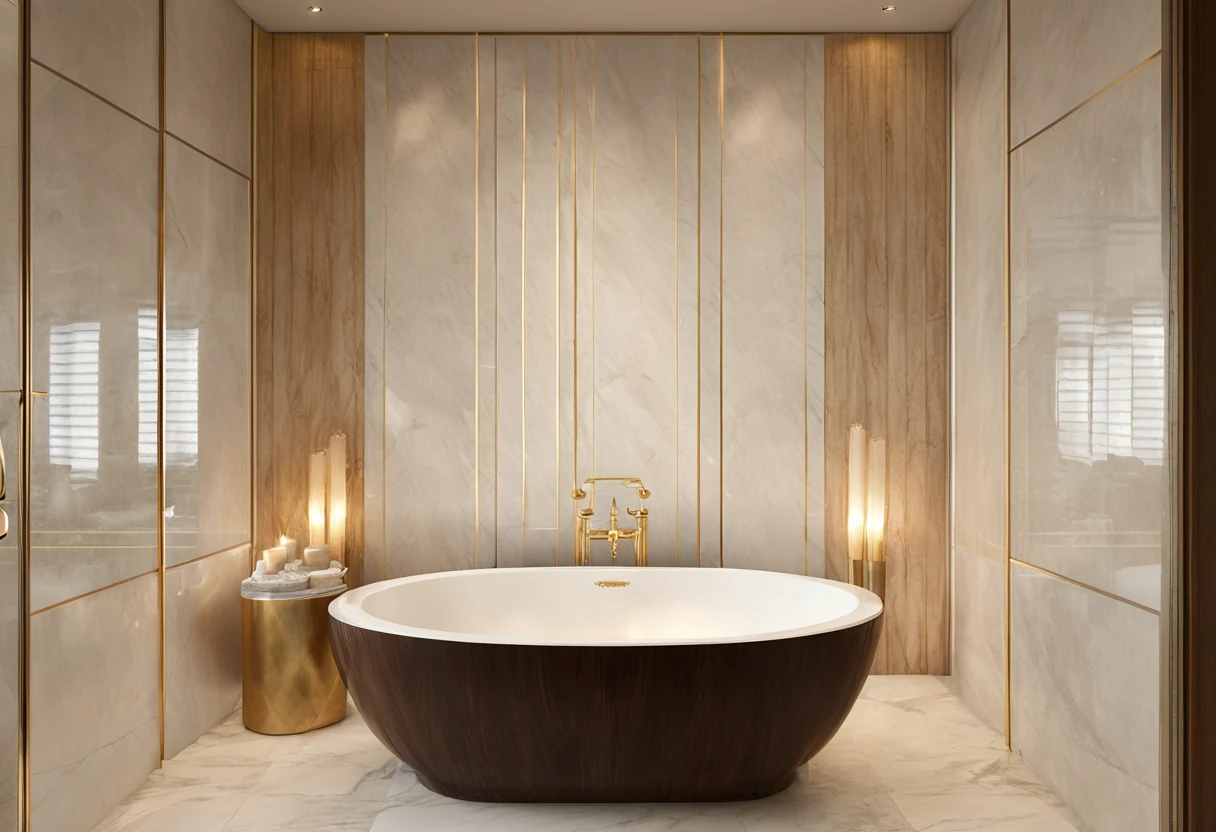
Water: From One Showerhead to Programmed Scenarios
Before: a single overhead shower and a bath filled by guesswork. The wellness replacement: thermostatic systems holding temperature within a degree, a 250-to-400-millimeter rain head with a separate handheld and, in fuller briefs, body jets and a cold-mist or contrast function; scenarios are programmed (a warm-up sequence, a wake-up sequence with a cooler finish), and bath filling becomes a set temperature and volume rather than an attended chore. The engineering behind the serenity is unglamorous: balanced pressure at 2 to 3 bar, generous hot-water recovery, and isolation valves that make service civilized. Budget band: quality thermostatic showers run €1,500 to €6,000 in hardware; a full spa shower enclosure with stonework and glazing lands at €8,000 to €25,000 installed.
Heat: The Hammam Comes Home
Before: a towel radiator. The wellness replacement: thermal rooms, scaled to the house: a private hammam running at 45 to 50 °C and saturated humidity from a 6-to-12-kilowatt steam generator, in a fully tanked enclosure with a sloped ceiling (condensation must run to walls, never drip on shoulders) and heated stone benches at skin-friendly 33 to 35 °C surface temperature; or a sauna at 80 to 95 °C where the brief leans Nordic. Heated floors graduate from comfort to protocol, warming towel cabinets replace the radiator, and the whole dimension demands the one discipline glossy photos omit: waterproofing and vapor barriers executed to swimming-pool standard. Budget band: domestic steam rooms run €15,000 to €50,000, saunas €10,000 to €40,000, heated floors €80 to €150 per square meter.
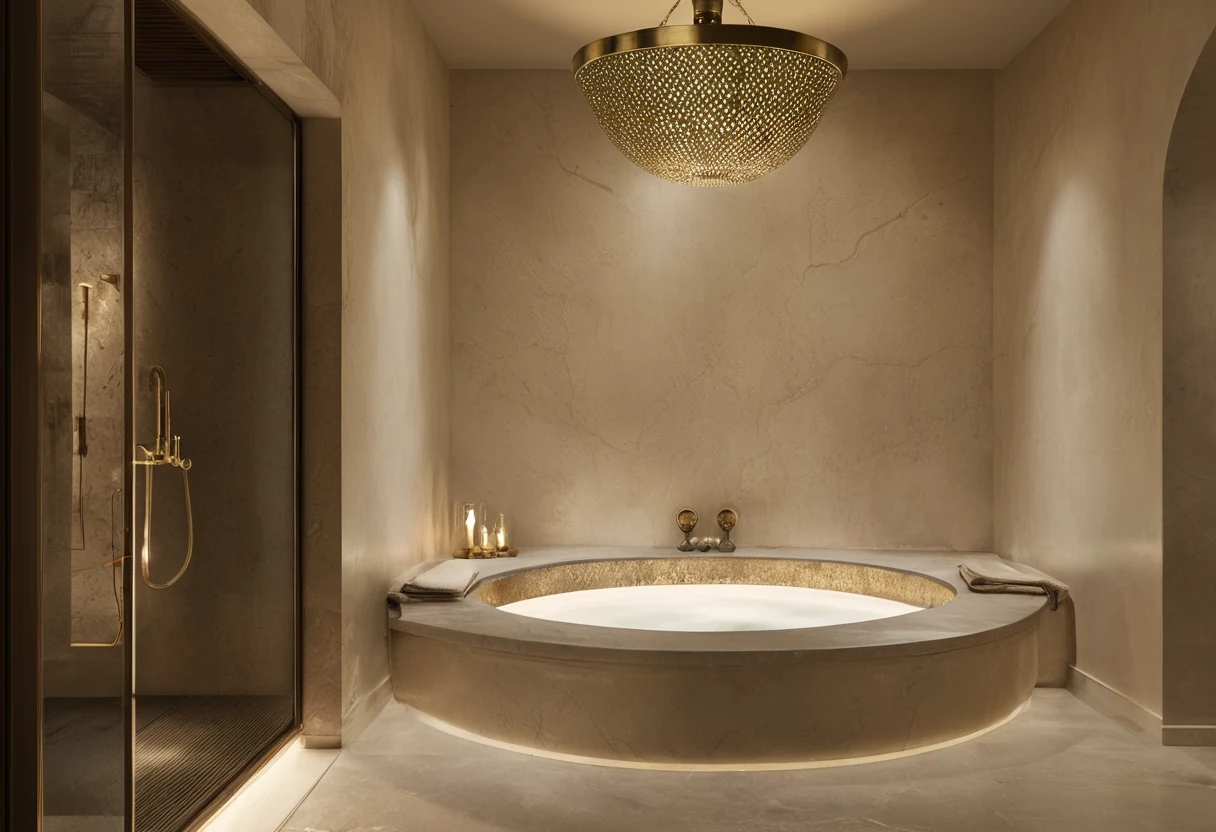
Light: From One Ceiling Plafond to a Programmed Dawn
Before: a central fixture and a strip over the mirror, both at whatever color temperature the electrician had in the van. The wellness replacement: three circuits minimum (ambient cove, functional mirror light at CRI 90+ for grooming, low night path lighting), all moisture-rated, all dimmable, programmed into scenes: a 2200-Kelvin dawn ramp that brings the room up over ten minutes, a neutral grooming scene, an evening bath scene at candle levels, and chromotherapy where the brief asks for it, colored light cycles borrowed directly from spa treatment rooms. The circadian logic is the trend's substance: morning light cooler and rising, evening light warm and falling, in the room where both ends of the day physically happen. Budget band: €3,000 to €15,000 depending on control system depth.
Sound: The Most Underrated Luxury Is 30 Decibels
Before: a fan that announces itself, a door that slams, tile echo. The wellness replacement: engineered quiet: extraction sized to run below 30 dB(A) at duty point (or remote-mounted with attenuators), soft-close everything, acoustic underlay beneath stone floors so footfall stays in the room, and absorption smuggled in through towels, upholstered seating and timber slat ceilings, because a hard-surfaced bathroom otherwise rings like the marble box it is. Hidden moisture-rated speakers finish the dimension for those who want sound, but the trend's core is the opposite: the bathroom as the one room guaranteed to produce silence on demand. Budget band: modest for what it changes, €2,000 to €10,000 across a full renovation.
Touch: Materials Chosen by Bare Feet, Not by Catalogs
Before: polished tile everywhere, chosen by photograph. The wellness replacement: a barefoot material plan: honed or brushed stone with real slip resistance underfoot, teak slat mats and bench tops where skin meets surface wet, heated floor zones holding stone at body-friendly warmth, and textiles specified by weight (bath towels at 600 to 700 grams per square meter behave differently from hotel-laundry 400s). The thermal-touch logic from spa design governs: materials skin contacts are warm-feeling species (teak, textile, heated stone), and cold-feeling surfaces are reserved for where hands and feet do not rest. Specialists in bespoke bathrooms treat this dimension as the project's signature, because touch is the sense a bathroom serves first and photographs never.
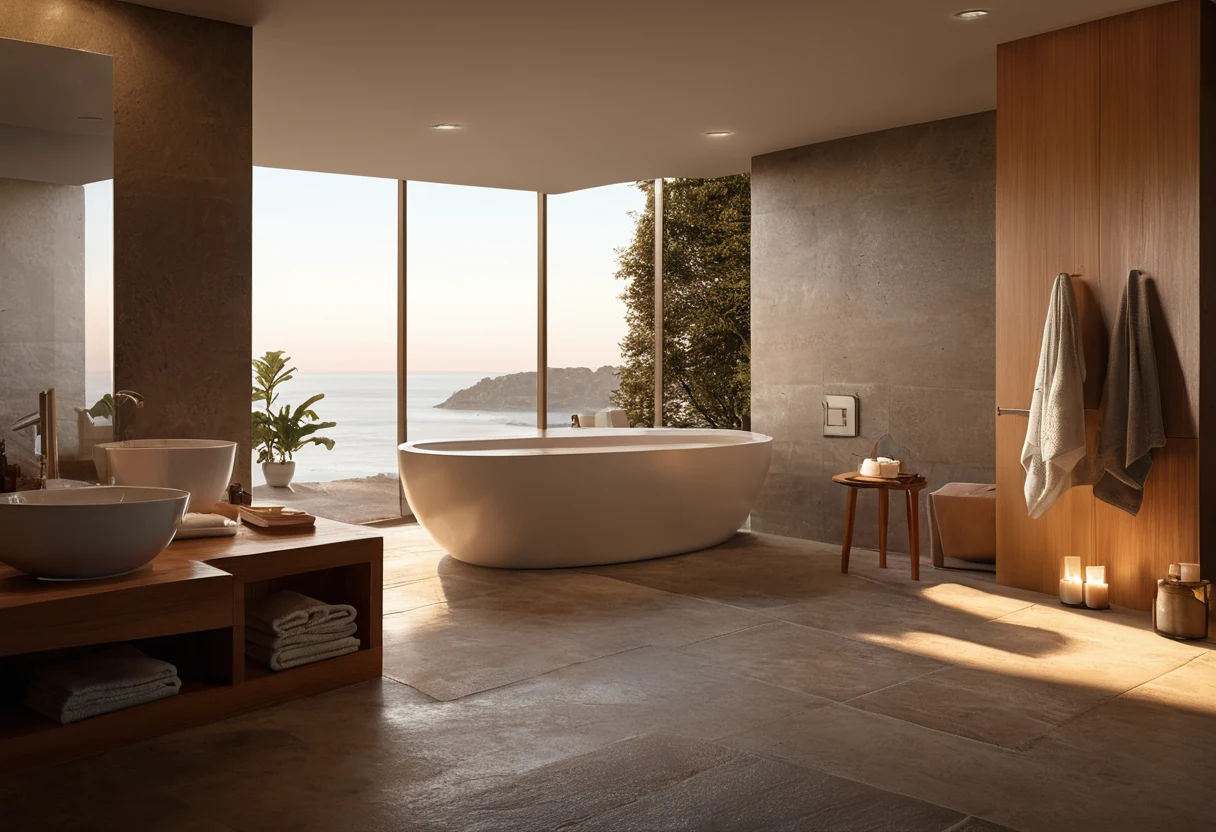
The Transfer Checklist: Bringing the Spa Home in Eight Lines
- Pick two dimensions to do completely rather than five at half depth; water and heat carry the most daily effect per euro.
- Thermostatic water with one programmed scenario minimum; guesswork temperature is the "before" picture.
- If a steam room enters the brief, budget the waterproofing like a pool and the ceiling slope like a rule.
- Three light circuits, scenes programmed, dawn ramp included; CRI 90 at the mirror.
- Specify the extraction's decibels in the contract, not just its airflow.
- Run the barefoot audit on every floor finish: slip grade, thermal feel, heated zones.
- Weigh the towels; 600 grams per square meter is where "spa" starts being a texture instead of a word.
- Leave one wall, one bench or one corner deliberately empty. Spas calm people partly by refusing to fill space, and the home version inherits the duty.
The bathroom earned its renovation budget the same way the kitchen did a generation earlier: by becoming the room where a measurable technology stack changes how every single day starts and ends. The five dimensions above are that stack, and the houses applying them have quietly added a third place, after kitchen and bedroom, where the home competes with the world's best hospitality and wins on commute time.